Auto Body Shop Insurance Claims: How We Work with All Auto Insurance Companies to Simplify Your Car Accident Repair
Navigating the complexities of auto insurance claims can be daunting, especially after a car accident. Understanding how an auto body shop collaborates with various insurance companies is crucial for a smooth repair process. In this article, we will explore how Benedict Auto Body assists customers in managing their insurance claims effectively. You will learn about the role of insurance-approved collision repair shops, the step-by-step collision repair insurance process, and the types of auto insurance coverages accepted. Additionally, we will highlight why choosing Benedict Auto Body can simplify your repair experience.
Indeed, managing these claims effectively is crucial, especially when considering the broader economic factors influencing repair and insurance costs.
Controlling Auto Collision Repair & Insurance Costs
In spite of all these advances in technologies, the reality is that vehicles will continue to be involved in collisions. The rate of increase in average collision repair costs more than offsets decreases in collision claims frequencies. How can the cost of insurance and collision repairs be kept in control, to keep vehicles afford
Designing for Insurability: Best Practices to Achieve Lower Vehicle Repair Costs, 2004
By the end of this article, you will have a comprehensive understanding of how to navigate insurance claims and the benefits of working with a trusted auto body shop.
How Does Benedict Auto Body Assist with All Auto Insurance Claims?
Benedict Auto Body plays a vital role in assisting customers with their auto insurance claims. As an insurance-approved collision repair shop, we streamline the claims process, ensuring that customers receive the support they need during a stressful time. Our team is well-versed in the intricacies of insurance claims, providing guidance on the necessary documentation and procedures.
What Is the Role of an Insurance-Approved Collision Repair Shop?
An insurance-approved collision repair shop, like Benedict Auto Body, is recognized by insurance companies for meeting specific standards of quality and service. This approval offers several benefits, including:
- Trust and Reliability: Insurance companies trust approved shops to perform high-quality repairs, ensuring that vehicles are restored to their pre-accident condition or to industry standards.
- Streamlined Claims Process: Working with an approved shop simplifies communication between the repair facility and the insurance company, expediting the claims process.
- Customer Assurance: Customers can feel confident knowing that their repairs will be handled by professionals who adhere to industry standards.
How Does Benedict Auto Body Handle Direct Billing and Paperwork?
Benedict Auto Body simplifies the billing process by offering direct billing to insurance companies. This means that customers typically do not have to pay out-of-pocket for repairs upfront, depending on their insurance policy and deductible. Our process includes:
This approach aligns with the industry practice of direct repair programs, which further streamlines the financial aspects of collision repair.
Auto Body Shop Direct Repair Programs & Insurance Billing
direct repair programs, in which they contract with particular automobile collision repair facilities (hereafter “body shops”), body shops might be more likely to bill the insurance.
Automobile insurance vehicle repair practices: Politics, economics, and consumer interests, C Cole, 2015
- Simplifying the Billing Process: We handle all the paperwork and billing directly with the insurance company, reducing the burden on the customer.
- Reducing Customer Stress: By managing the financial aspects of the repair, we allow customers to focus on their recovery and getting back on the road.
- Ensuring Timely Payments: Our established relationships with insurance companies help ensure that payments are processed quickly and efficiently.
What Is the Step-by-Step Collision Repair Insurance Process?
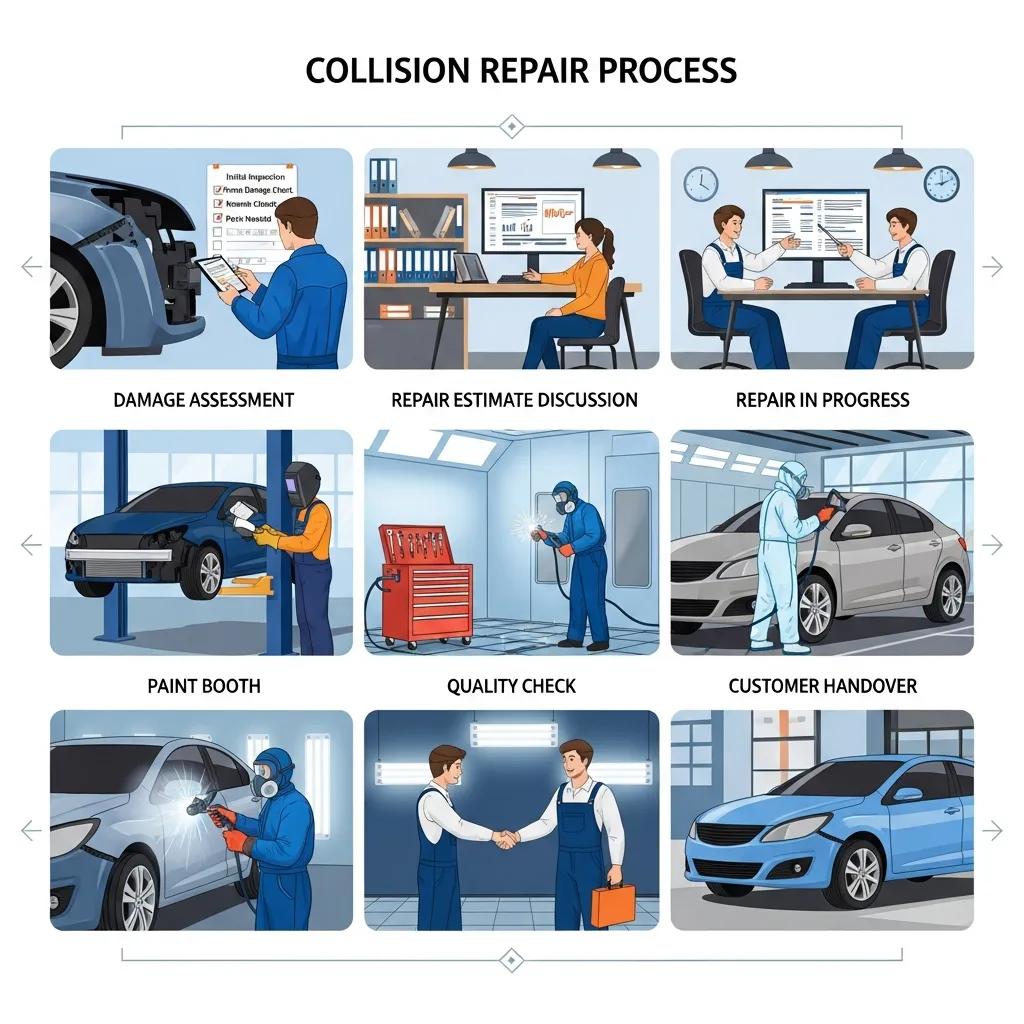
Understanding the collision repair insurance process can help customers navigate their claims more effectively. The process typically involves several key steps:
- Reporting the Accident: The first step is to report the accident to your insurance company. This includes gathering necessary information such as the police report, photos of the damage, and details of the other party involved.
- Starting Your Insurance Claim: After reporting the accident, you will need to file a claim with your insurance provider. This may involve filling out forms and providing documentation.
- Repair Estimate and Insurance Approval: Once the claim is filed, an insurance adjuster will assess the damage and provide an estimate for repairs. This estimate must be approved by the insurance company before work can begin.
How Do You Report an Accident and Start Your Insurance Claim?
Reporting an accident and starting your insurance claim involves several important steps:
- Gather Information: Collect all relevant details, including the date, time, and location of the accident, as well as contact information for any witnesses.
- Contact Your Insurance Company: Notify your insurance provider as soon as possible. Most companies have a dedicated claims hotline for reporting accidents.
- File the Claim: Follow your insurance company’s procedures for filing a claim, which may include submitting forms and documentation online or via phone.
What Happens During the Repair Estimate and Insurance Approval?
After filing a claim, the next step is the repair estimate and insurance approval process:
This crucial stage often involves a thorough verification process to ensure that the claim accurately reflects the necessary post-accident repairs.
Verification of Post-Accident Auto Insurance Claims
to cover the costs of post-accident repairs. The actual scale of method for the verification of auto insurance claims to support
Verification of motor vehicle post accident insurance claims, P Aleksandrowicz, 2020
- Creating the Estimate: A qualified technician at Benedict Auto Body will assess the damage and create a detailed repair estimate, outlining the necessary work and associated costs.
- Insurance Adjuster Role: An insurance adjuster will review the estimate to determine coverage and approve the necessary repairs.
- Approval Timelines: The approval process can vary, but we work closely with insurance companies to expedite this step, ensuring repairs can begin as soon as possible.
Managing All Auto Insurance Claims for Collision Repairs

Benedict Auto Body accepts a wide range of auto insurance coverages, making it easier for customers to get the repairs they need. Understanding the different types of coverage and how deductibles work is essential for navigating the claims process.
What Is the Difference Between Collision and Comprehensive Coverage?
Collision and comprehensive coverage are two primary types of auto insurance that serve different purposes:
- Collision Coverage: This type of insurance covers damage to your vehicle resulting from a collision with another vehicle or object, regardless of fault. It is essential for those who want to ensure their vehicle is repaired after an accident.
- Comprehensive Coverage: Comprehensive coverage protects against non-collision-related incidents, such as theft, vandalism, or natural disasters. This coverage is crucial for safeguarding your vehicle from a broader range of risks.
How Are Deductibles Applied in Auto Body Repairs?
Deductibles play a significant role in the cost of auto body repairs. Here’s how they work:
- Definition of Deductibles: A deductible is the amount you must pay out-of-pocket before your insurance coverage kicks in. For example, if your deductible is $500 and your repair costs are $2,000, you will pay the first $500, and your insurance will cover the remaining $1,500.
- Examples of Deductible Application: If you have a collision claim, your deductible will apply to the repair costs. Similarly, if you have comprehensive coverage for a non-collision incident, the deductible will also apply.
- Customer Responsibilities: It’s important for customers to understand their deductible amounts and how they impact the overall cost of repairs.
Why Choose Benedict Auto Body for Insurance-Approved Collision Repairs?
Choosing the right auto body shop for insurance-approved collision repairs can significantly impact your repair experience. Here are some reasons to consider Benedict Auto Body:
- Certifications and Warranties: We offer various certifications and warranties on our repairs, ensuring that customers receive high-quality service and peace of mind.
- Customer Service Focus: Our team is dedicated to providing exceptional customer service, guiding you through every step of the repair process.
- Community Involvement: As a local business, we are committed to supporting our community and building lasting relationships with our customers.
What Certifications and Warranties Does Benedict Auto Body Offer?
Benedict Auto Body is proud to offer several certifications and warranties that enhance our service quality:
- Certifications: We are certified by major auto manufacturers and industry organizations, ensuring that our technicians are trained to meet specific repair standards.
- Warranty Details: Our repairs come with a warranty that covers both parts and labor, providing customers with confidence in the quality of our work.
- Importance for Customers: These certifications and warranties not only ensure high-quality repairs but also protect customers’ investments in their vehicles.
How Does Benedict Auto Body Communicate with Insurance Companies and Customers?
Effective communication is key to a smooth repair process. At Benedict Auto Body, we prioritize clear communication with both insurance companies and customers:
- Communication Channels: We utilize various channels, including phone, email, and in-person consultations, to keep customers informed throughout the repair process.
- Customer Updates: Regular updates on the status of repairs and insurance claims help alleviate customer concerns and ensure transparency.
- Insurance Liaison Roles: Our team acts as a liaison between customers and insurance companies, facilitating communication and expediting the claims process.
What Are Common Questions About Auto Body Shop Insurance Claims?
Many customers have questions about the insurance claims process and their rights when dealing with auto body shops. Here are some common inquiries:
Do I Have to Use My Insurance Company’s Preferred Body Shop?
Customers often wonder if they are required to use their insurance company’s preferred body shop. The answer is no; you have the right to choose your repair facility. While insurance companies may recommend certain shops, you can select a shop that meets your needs and preferences.
Are OEM Parts Used in Insurance Repairs and Why Does It Matter?
The use of Original Equipment Manufacturer (OEM) parts in repairs is a common concern for customers. Here’s why it matters:
- Definition of OEM Parts: OEM parts are made by the vehicle’s manufacturer and are designed to fit and function exactly like the original components.
- Benefits of Using OEM: Using OEM parts ensures that repairs maintain the vehicle’s integrity and performance, which can be crucial for safety and resale value.
- Impact on Repairs: Choosing a shop that uses OEM parts can provide peace of mind, knowing that your vehicle is being repaired with high-quality components.
| Coverage Type | Description | Deductible Impact |
|---|---|---|
| Collision Coverage | Covers damage from collisions with other vehicles or objects | Deductible applies to repair costs |
| Comprehensive Coverage | Covers non-collision incidents like theft or natural disasters | Deductible applies to repair costs |
| Liability Coverage | Covers damages to other parties in an accident | No deductible for repairs to your vehicle |
This table illustrates the different types of coverage and how deductibles impact repair costs, helping customers make informed decisions about their insurance options.